
Why AI Is Hurting Your Best Engineers Most
The productivity story on AI coding tools has a flattering headline: senior engineers realize nearly five times the productivity gains of junior engineers from AI tools. More experience means better prompts, better evaluation of output, better use of AI on the right tasks. The gap is real and it makes sense.
But there’s a hidden cost buried in that same data. The tasks senior engineers are being asked to spend their time on are changing—and not always in ways that use their strengths well. Increasingly, the work that lands on senior engineers’ plates in AI-augmented teams is validation, review, and debugging of AI-generated code—a category of work that is simultaneously less interesting, harder than it looks, and consuming time that used to go to architecture, design, and mentorship.

Getting Your Team Unstuck: A Manager's Guide to AI Adoption
You’ve got AI tools in place. You’ve encouraged the team to use them. But the feedback is lukewarm or negative: “We tried it.” “It’s not really faster.” “We don’t see the benefit.” As a manager, you’re stuck between leadership expecting ROI and a team that doesn’t feel it.
The way out isn’t to push harder or to give up. It’s to change how you’re leading the adoption: create safety to experiment, narrow the focus so wins are visible, and align incentives so that “seeing benefits” is something the team can actually achieve. This guide is for engineering managers whose teams are struggling to see any performance benefits from AI in their software engineering workflows—and who want to turn that around.
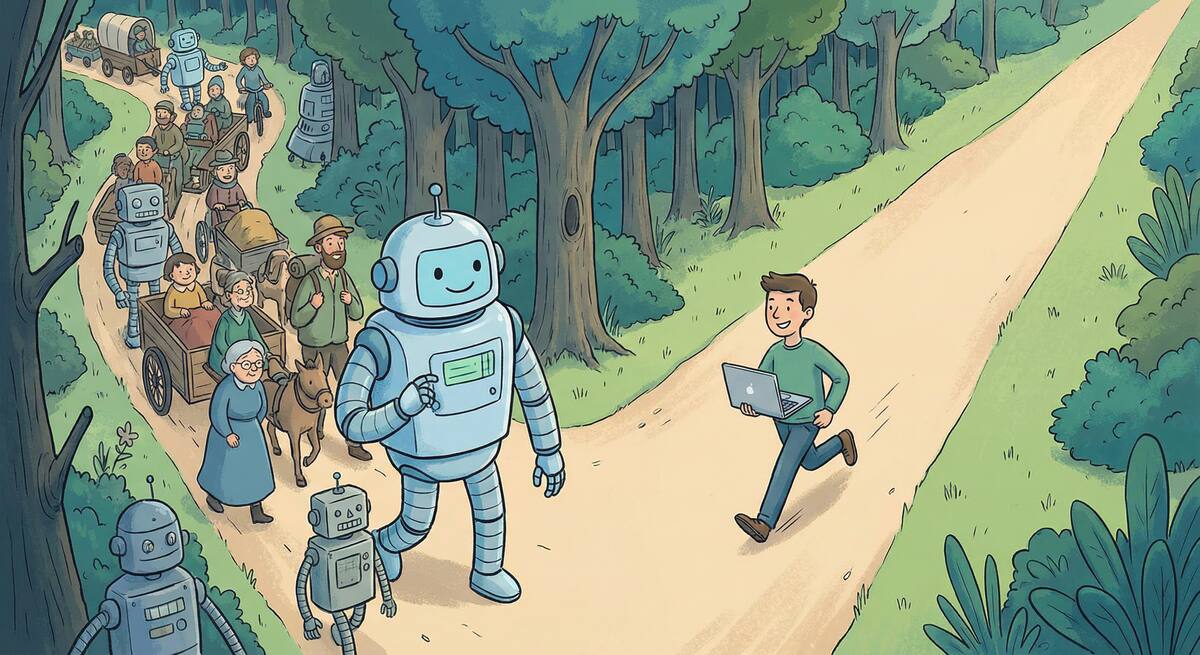
When AI Slows You Down: Picking the Right Tasks
One of the main reasons teams don’t see performance benefits from AI is simple: they’re using it for the wrong things.
AI can make you faster on some tasks and slower on others. If the mix is wrong—if people lean on AI for complex design, deep debugging, and security-sensitive code while underusing it for docs, tests, and boilerplate—then overall you feel no gain or even a net loss. The tool gets blamed, but the issue is task fit.
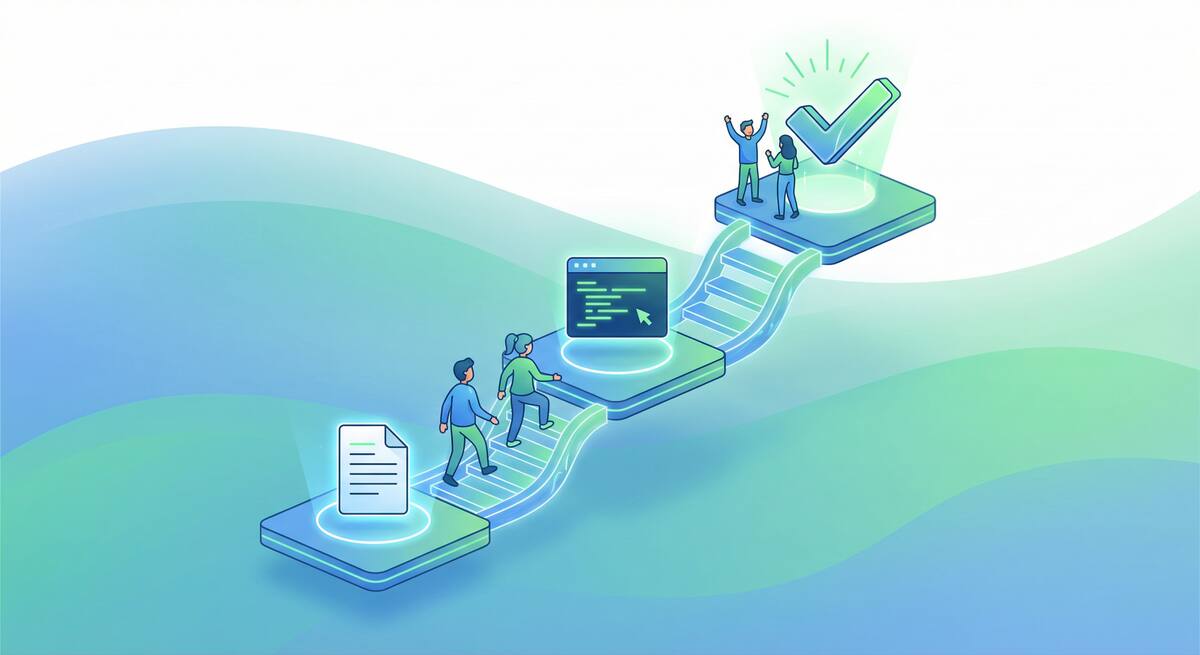
Start Here: Three AI Workflows That Show Results in a Week
When a team has tried AI and concluded “we don’t see the benefit,” the worst move is to push harder on the same, vague usage. A better move is to pick a few concrete workflows where AI reliably helps, run them for a short time, and measure the outcome. That gives the team something tangible to point to—“this is where AI helped us.”
Here are three workflows that tend to show results within a week and are a good place to start for teams struggling to see performance benefits from AI in their software engineering workflows.

The Trust Collapse: Why 84% Use AI But Only 33% Trust It
Usage of AI coding tools is at an all-time high: the vast majority of developers use or plan to use them. Trust in AI output, meanwhile, has fallen. In recent surveys, only about a third of developers say they trust AI output, with a tiny fraction “highly” trusting it—and experienced developers are the most skeptical.
That gap—high adoption, low trust—explains a lot about why teams “don’t see benefits.” When you don’t trust the output, you verify everything. Verification eats the time AI saves, so net productivity is flat or negative. Or you use AI only for low-stakes work and conclude it’s “not for real code.” Either way, the team doesn’t experience AI as a performance win.
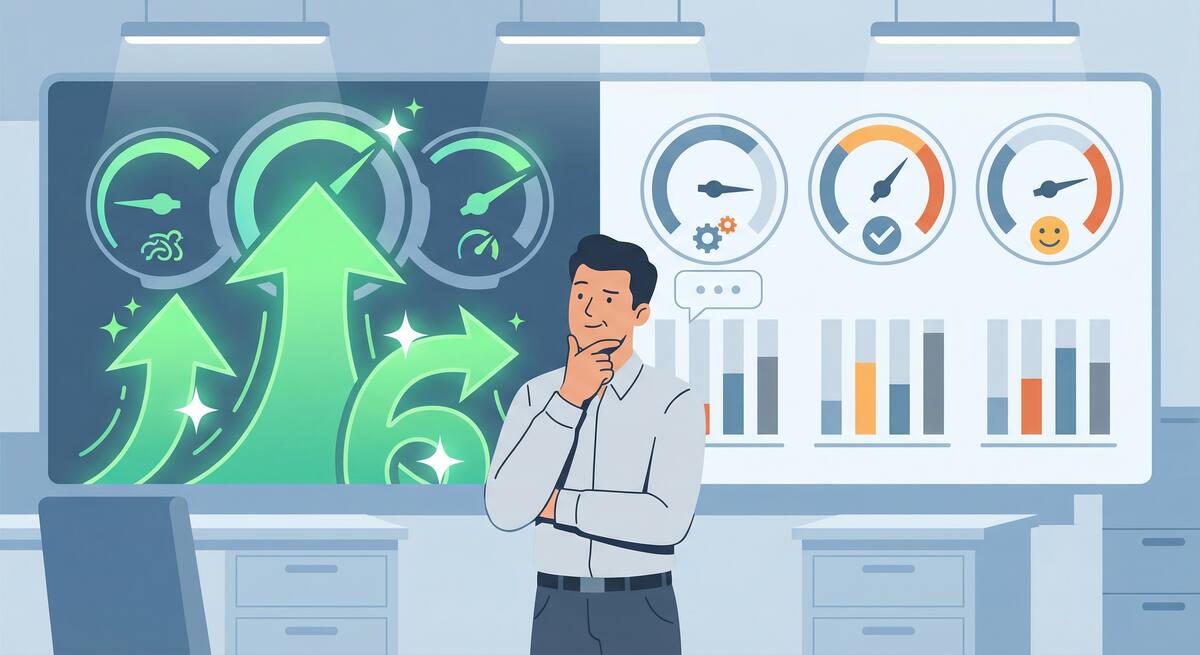
Measuring What Matters: Getting Real About AI ROI
When a team says they don’t see performance benefits from AI, the first question to ask isn’t “Are you using it enough?” It’s “How are you measuring benefit?”
A lot of organizations track adoption (who has a license, how often they use the tool) or activity (suggestions accepted, chats per day). Those numbers go up and everyone assumes AI is working. But cycle time hasn’t improved, quality hasn’t improved, and the team doesn’t feel faster. So you get a disconnect: the dashboard says success, the team says “we don’t see it.”

OpenClaw for Teams That Gave Up on AI
Lots of teams have been here: you tried ChatGPT, Copilot, or a similar assistant. You used it for coding, planning, and support. After a few months, the verdict was “meh”—maybe a bit faster on small tasks, but no real step change, and enough wrong answers and extra verification that it didn’t feel worth the hype. So you dialed back, or gave up on “AI” as a productivity lever.
If that’s you, the next step isn’t to try harder with the same tools. It’s to try a different kind of tool: one built to do a few concrete jobs in your actual environment, with access to your systems and a clear way to see that it’s helping. OpenClaw (and tools like it) can be that next step—especially for teams that are struggling to see any performance benefits from AI in their software engineering workflows.

Why Your Team Isn't Seeing AI Benefits (And It's Not the Tools)
You rolled out AI coding tools. You got licenses, ran the demos, and encouraged the team to try them. Months later, the feedback is lukewarm: “We use it sometimes.” “It’s okay for small stuff.” “I’m not sure it’s actually faster.” Nobody’s seeing the dramatic productivity gains the vendor promised.
If this sounds familiar, you’re not alone. Research shows that while 84% of developers use or plan to use AI tools, only 55% find them highly effective—and trust in AI output has dropped sharply. Adoption doesn’t equal impact. The gap between “we have AI” and “AI is helping us ship better, faster” is where most teams get stuck.

The Documentation Problem AI Actually Solves
I’ve spent the past several weeks writing critically about AI tools—the productivity paradox, comprehension debt, burnout risks, vibe coding dangers. Those concerns are real and important.
But I want to end this series on a genuinely positive note, because there’s one area where AI tools deliver clear, consistent, unambiguous value for engineering teams: documentation.
Documentation is the unloved obligation of software development. Everyone agrees it’s important. Nobody wants to write it. The result is that most codebases are woefully underdocumented, and the documentation that does exist is often outdated, incomplete, or wrong.

Comprehension Debt: When Your Team Can't Explain Its Own Code
Technical debt is a concept every engineering leader understands. You take a shortcut now, knowing you’ll need to come back and fix it later. The debt is visible: you can point to the code, explain what’s wrong with it, and estimate the cost of fixing it.
AI-generated code is introducing something different—and arguably worse. Researchers have started calling it “comprehension debt”: shipping code that works but that nobody on your team can fully explain.

AI Code Review: The Hidden Bottleneck Nobody's Talking About
Here’s a problem that’s creeping up on engineering teams: AI tools are dramatically increasing the volume of code being produced, but they haven’t done anything to increase code review capacity. The bottleneck has shifted.
Where teams once spent the bulk of their time writing code, they now spend increasing time reviewing code—much of it AI-generated. And reviewing AI-generated code is harder than reviewing human-written code in ways that aren’t immediately obvious.

From Code Writer to AI Orchestrator: The Changing Developer Role
There’s a narrative circulating in tech circles: developers are evolving from “code writers” to “AI orchestrators.” The story goes that instead of typing code ourselves, we’ll direct AI agents that write code for us. Our job becomes coordination, review, and high-level direction rather than implementation.
It’s a compelling vision. It’s also significantly oversimplified.
Research shows that developers can currently “fully delegate” only 0-20% of tasks to AI. That’s not nothing, but it’s far from the wholesale transformation some predict. The reality of how developer roles are changing is more nuanced—and more interesting—than the hype suggests.

The 32% Problem: Why Most Engineering Orgs Are Flying Blind on AI Governance
Here’s a statistic that should concern every engineering leader: only 32% of organizations have formal AI governance policies for their engineering teams. Another 41% rely on informal guidelines, and 27% have no governance at all.
Meanwhile, 91% of engineering leaders report that AI has improved developer velocity and code quality. But here’s the kicker: only 25% of them have actual data to support that claim.
We’re flying blind. Most organizations have adopted AI tools without the instrumentation to know whether they’re helping or hurting, and without the policies to manage the risks they introduce.
Always Use Automated Integration Testing
QA or Quality Assurance of a software project is often the area of software development that is most neglected. Typically developers avoid software testing like their lives depended on it. While a basic level of testing is required for a single scenario to validate that your code “works”, the level of testing that is required to ensure that all users have a good user experience across all targeted platforms is something that a developer seems to think is beneath them.
Micromanagement Ruins Teams
It seems that the management thinking these days is that managers should empower their employees to make decisions and implement the actions behind these decisions. This works great when you have a team and management that has mutual trust with a mutual goal. However, when the manager does not trust the members of the team, or thinks that they have to be the one to make every decision or have input into every task, the empowerment disappears.
Categories
Tags
- 100pounds
- 2020
- Acp
- Adblock-Plus
- Adoption
- Agentic
- Agents
- Agile
- Ai
- Ai-Agents
- Amazon
- Apache
- Apple
- Architecture
- Audit
- Authorize-Net
- Automation
- Azure
- Benchmarks
- Bing
- Bingbot
- Blog
- Book-Reviews
- Books
- Burnout
- Business-Tools
- Cache
- Career
- Chatgpt
- Chrome
- Cicd
- Claude
- Cloudflare
- Code-Quality
- Code-Review
- Codex
- Coding
- Coding-Agents
- Compass
- Conversion
- Copilot
- Css
- Culture
- Cursor
- Cve
- Deployment
- Design-Patterns
- Developer-Experience
- Developer-Tools
- Developer-Velocity
- Development
- Disqus
- Docker
- Documentation
- Enterprise
- Fine-Tuning
- Firebase
- Firefox
- Full-Stack
- Future-of-Work
- Gemini
- Genesis-Framework
- Getting-Started
- Ghost-Tag
- Github
- Github-Copilot
- Githubpages
- Google-Slides
- Google-Workspace
- Governance
- Helper
- Hiring
- How-Not-To
- How-To
- Html
- Hugo
- Ide
- Infrastructure
- Integration
- Internet-Explorer
- Interviews
- Iphone-6
- Javascript
- Jekyll
- Jetbrains
- Jquery
- Junior-Developers
- Knowledge-Management
- Laravel
- Leadership
- Legal
- Lessons-Learned
- Llms
- Local-First
- MacOS
- Magento
- Magento 2
- Magento2
- Management
- Mcp
- Meetings
- Mental-Health
- Mentorship
- Metr
- Metrics
- Microsoft
- Models
- Moltbot
- Multi-Agent
- Mysql
- Netlify
- Nginx
- Nist
- Nodejs
- Open-Source
- Openai
- Openclaw
- Orchestration
- OSX
- Parallelization
- Performance
- Personal
- Php
- Policy
- Presentations
- Process
- Product-Development
- Productivity
- Programming
- Prompt-Injection
- Protocols
- Pull-Requests
- Python
- Quality
- Rant
- Remote-Work
- Replit
- Research
- Responsive-Web-Design
- Retrospective
- Roi
- Safari
- Sales
- Scrum
- Security
- Senior-Engineers
- Series
- Sitecatalyst
- Sota
- Sql
- Sql-Server
- Standards
- Tasks
- Teams
- Technical-Debt
- Testing
- Tier-Pricing
- Tips
- Tmobile
- Tools
- Trust
- Unittest
- Ux
- Validation
- Varnish
- Vercel
- Verification
- Vibe-Coding
- Visual-Studio
- Vs-Code
- Web-Development
- Windows-7
- Windows-Vista
- Woocommerce
- Wordpress
- Workflow
- Workflows
- Xml