Why AI Is Hurting Your Best Engineers Most
- 4 minutes - Mar 8, 2026
- #ai#senior-engineers#developer-experience#productivity#teams
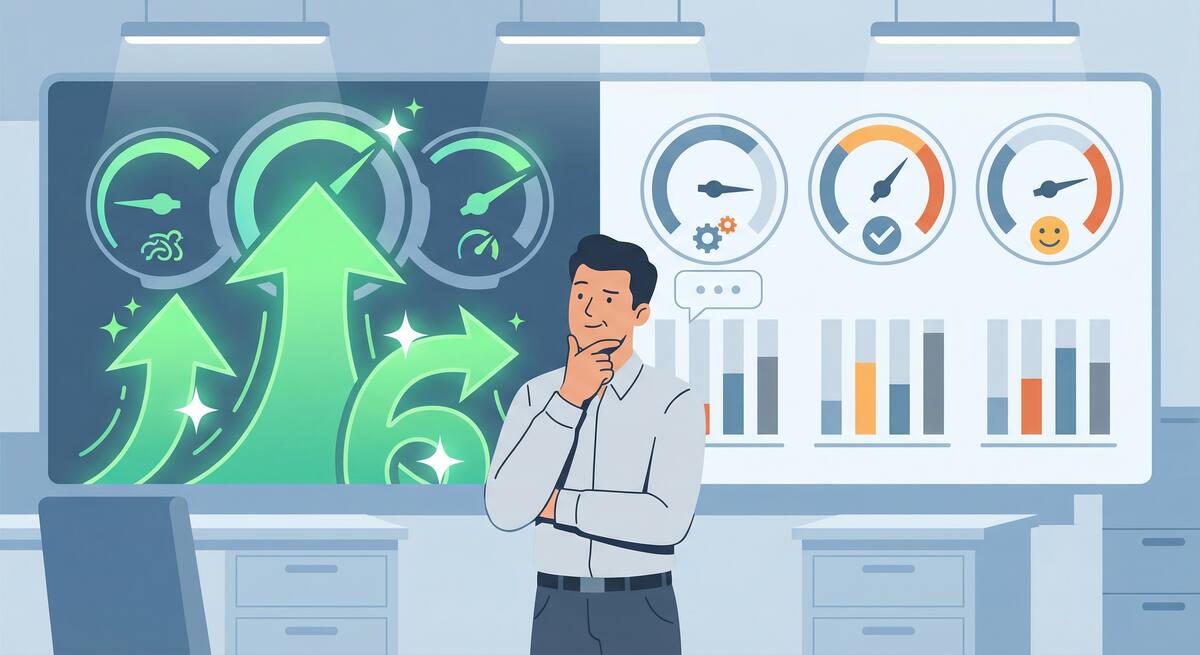
The productivity story on AI coding tools has a flattering headline: senior engineers realize nearly five times the productivity gains of junior engineers from AI tools. More experience means better prompts, better evaluation of output, better use of AI on the right tasks. The gap is real and it makes sense.
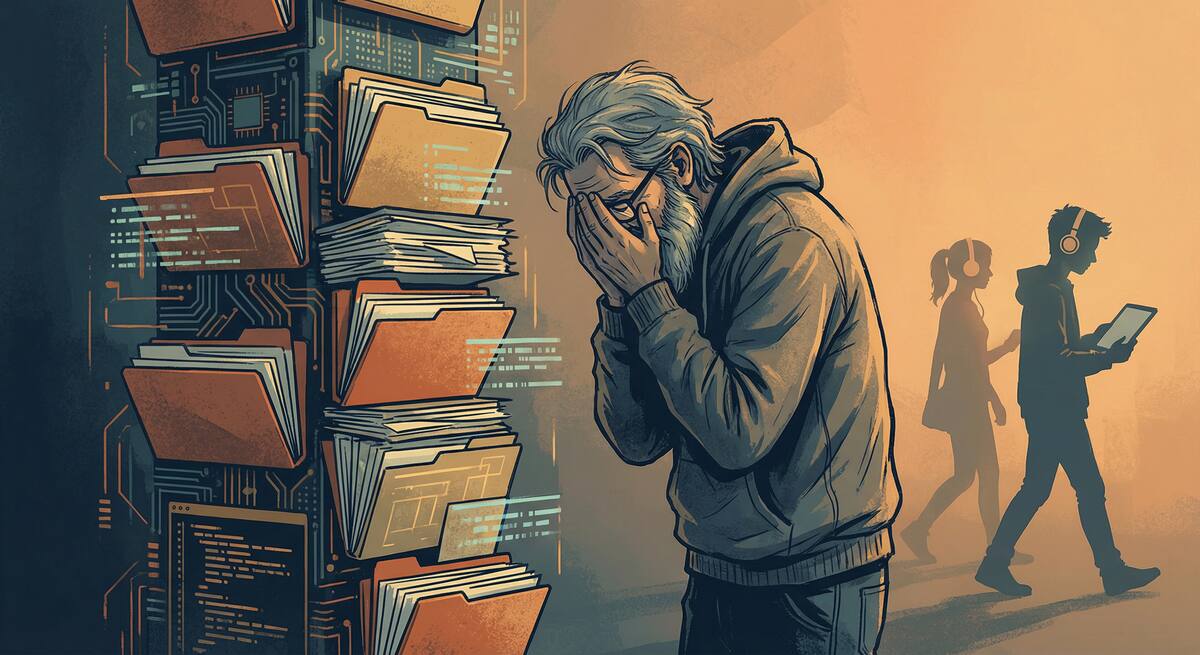
But there’s a hidden cost buried in that same data. The tasks senior engineers are being asked to spend their time on are changing—and not always in ways that use their strengths well. Increasingly, the work that lands on senior engineers’ plates in AI-augmented teams is validation, review, and debugging of AI-generated code—a category of work that is simultaneously less interesting, harder than it looks, and consuming time that used to go to architecture, design, and mentorship.
The Review Bottleneck Falls on Experienced Engineers
AI code generation has caused a volume surge in pull requests. Teams that handled 10–15 PRs per week are now seeing 50–100. AI-generated PRs have a 32.7% acceptance rate vs. 84.4% for human code. They contain 1.7x more issues per PR. They require more scrutiny, not less.
Who does that scrutiny? Senior engineers. They’re the ones with the context to know whether an AI-generated implementation is architecturally sound or just syntactically correct. They’re the ones who recognize that the code works but will be unmaintainable in six months. They’re the ones who can spot the subtle logic error that passes tests.
The result: senior engineers are now spending more time reviewing AI-generated code than they spent reviewing human-generated code before. The 5x productivity gain is real on the tasks where AI directly assists their own work. But those gains are being partially consumed by a new category of overhead: being the quality gate for a codebase that’s generating output faster than it can be reviewed.
The “Slower Senior” Problem
The METR study (July 2025) found that experienced developers believed AI made them 20% faster, yet objective testing showed they were 19% slower. The gap was largest for complex, context-dependent tasks—precisely the domain where senior engineers operate.
Why? AI tools are optimized for breadth, not depth. They can generate code for a wide range of common patterns quickly. But on tasks that require deep knowledge of a specific system, architectural history, or subtle constraints, the model’s output is often plausible-looking but wrong—or worse, right in isolation but wrong in context. Senior engineers catch this. They also spend time catching it.
Meanwhile, the cognitive overhead of integrating AI into complex workflows is real. Code generation is fast; understanding what the AI generated, evaluating whether it’s safe to accept, and deciding what to do when it’s wrong is not. For junior engineers working on contained, well-scoped tasks, that overhead is low relative to the speed gain. For senior engineers working on complex, cross-cutting problems, the overhead often exceeds the benefit.
The Mentorship Displacement Problem
There’s a second-order effect that shows up in team health rather than velocity metrics: senior engineers have less time for mentorship.
Before AI tools, a significant channel for knowledge transfer was collaborative review—seniors teaching juniors why code worked, what patterns to prefer, what tradeoffs to consider. The review conversation was the learning environment.
When PR volume doubles and AI-generated code has 1.7x more issues, the review queue becomes a triage problem rather than a teaching opportunity. Senior engineers are optimizing for throughput—approve, reject, request changes—not for explanation. The teaching layer gets stripped out. Juniors learn to produce code faster with AI help; they don’t learn to understand systems more deeply. That’s a deferral, not a solution, and the debt shows up when those same juniors are expected to own complex systems without the conceptual foundation review conversations used to build.
What Engineering Leaders Should Do
Protect senior engineers’ design time explicitly. If a senior engineer’s calendar is consumed by PR review, they’re not doing system design, architecture documentation, or technical strategy. Those activities create the context that makes AI tools less dangerous—they’re also the ones AI can’t replace. Make the tradeoff visible and deliberate.
Don’t default to seniors as the AI review layer. Build the quality infrastructure—automated security scans, AI-aware linters, review guidelines for AI code—that makes review faster and less dependent on a single expert. The goal is to reserve senior engineering judgment for the decisions that actually require it.
Redesign mentorship to work with higher volume. Pairing sessions, design reviews, and architecture walkthroughs can still create learning environments even when PR-level review is high-volume. Explicitly invest in those formats. Don’t let the triage dynamic crowd out intentional skill development.
Ask what senior engineers would rather be doing. The answer is rarely “reviewing more AI-generated PRs.” It’s usually “designing better systems,” “solving the hard problems,” or “working on something novel.” If AI tools are displacing that work rather than enabling it, something has gone wrong in how the team is structured.
The 5x productivity gain is real and worth having. But a senior engineer who spends their days validating AI output instead of shaping architecture is a senior engineer whose leverage is being squandered. That’s a configuration problem, not a fixed outcome of AI adoption.