The PR Tsunami: What AI Code Volume Is Doing to Your Review Process
- 4 minutes - Mar 3, 2026
- #ai#code-review#developer-velocity#pull-requests#process
AI coding tools delivered on their core promise: developers write less, ship more. Teams using AI complete 21% more tasks. PR volume has exploded—some teams that previously handled 10–15 pull requests per week are now seeing 50–100. In a narrow sense, that’s a win.
But there’s a tax on that win that most engineering leaders aren’t accounting for: AI-generated PRs wait 4.6x longer for review than human-written code, despite actually being reviewed 2x faster once someone picks them up. The bottleneck isn’t coding anymore. It’s review capacity, and it’s getting worse as AI generation accelerates.
The Numbers Are Real
The Opsera AI Coding Impact 2026 Benchmark Report and corroborating data from byteiota put the picture in sharp relief:
- AI-generated code produces 1.7x more issues per PR than human code: 10.83 issues vs. 6.45
- Logic and correctness errors are up 75%; security vulnerabilities 1.5–2x higher
- AI PRs have a 32.7% acceptance rate vs. 84.4% for human code—a 2.6x difference
- PR sizes are 18% larger, touching more architectural surfaces per change
- 41% of monthly code pushes are now AI-assisted
The acceptance rate gap alone tells you something important: reviewers are catching and rejecting AI-generated PRs at much higher rates, which means they’re doing more work per PR, not less. That extra work is silent in velocity dashboards that only track throughput.
The “Vibe Merging” Problem
There’s a counter-pattern emerging. Because PR volume is high and review is slow, some teams are developing a “vibe merging” culture: accepting AI PRs with minimal scrutiny because the code looks reasonable, the CI is green, and there’s a queue of ten more waiting. This is the logical response to misaligned incentives—if the system rewards throughput and doesn’t surface hidden defects until later, the rational move is to merge and move on.
The downstream cost of vibe merging shows up in incident response, security scans, and the slow accumulation of brittle code that nobody understands well enough to debug. One study found that without governance in place, AI-generated PRs require 4.6x longer wait times precisely because reviewers learn that accepting them at face value creates problems. The system adjusts—just not in the right direction.
What Atlassian Did
Atlassian cut PR cycle time by 45% using Rovo Dev, their contextual AI code review product. The key mechanism: instead of only reviewing AI-generated code after the fact, the tool enforces standards and acceptance criteria at generation time, before a PR is opened. Issues are caught upstream, which means the reviewer sees cleaner code and spends less time on correctness checking.
The side effect was meaningful for onboarding: new engineers merged their first PRs five days faster than before. When review friction is lower, the path from contribution to merge is shorter for everyone.
The principle generalizes beyond Atlassian’s specific tooling: the leverage point is shifting quality left, so reviewers aren’t being asked to be the sole quality gate on AI-generated code.
What to Actually Do
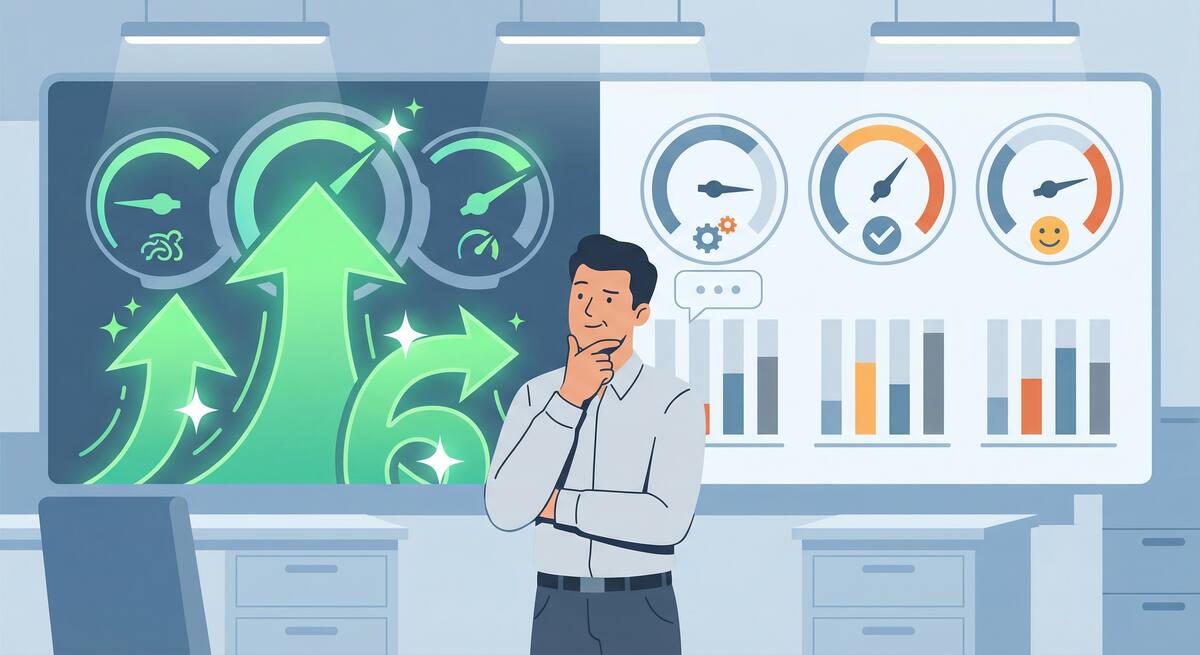
Stop measuring PR throughput alone. If AI is generating more PRs that fail review at higher rates, raw throughput is misleading. Track acceptance rate, time-to-review, and post-merge defect rate alongside volume. You need to know whether you’re shipping faster or just queueing faster.
Treat AI-generated PRs as a different category. They have different risk profiles. A PR from a senior engineer with 3 years in the codebase is not the same risk as a PR generated by an agent that’s never seen your architecture. Route them accordingly: automated pre-checks, targeted review assignment, explicit acceptance criteria.
Add a quality gate before the PR queue. Linters, security scanners, and AI-aware review tools can catch the predictable issues—style violations, duplicated logic, OWASP-flagged patterns—before a human reviewer ever opens the PR. Every issue caught pre-review is time saved for the humans who can’t be scaled.
Make review capacity visible. Most engineering teams can tell you how many PRs were merged this week. Fewer can tell you what percentage of reviewer bandwidth was consumed by AI-generated code, or how much rework those PRs required. If you can’t see the review bottleneck, you can’t address it.
The PR tsunami is real, and it’s not going away. AI generation will only get faster. The answer isn’t to slow it down—it’s to build a review process that can handle volume without trading away quality for throughput.