
Cursor vs. Copilot in 2026: What Actually Matters for Your Team
By 2026 the AI coding tool war is a fixture of tech news. Cursor—the AI-native editor from a handful of MIT grads—has reached a $29.3B valuation and around $1B annualized revenue in under two years. GitHub Copilot has crossed 20 million users and sits inside most of the Fortune 100. The comparison pieces write themselves: Cursor vs. Copilot on features, price, workflow. But for teams that have adopted one or both and still don’t see clear performance benefits, the lesson from 2026 isn’t “pick the winning tool.” It’s that the tool is often the wrong place to look.

OpenClaw for Engineering Teams: Beyond Chatbots
I wrote recently about using OpenClaw (formerly Moltbot) as an automated SDR for sales outreach. That post focused on a business use case, but since then I’ve been exploring what OpenClaw can do for engineering teams specifically—and the results have been more interesting than I expected.
OpenClaw has evolved significantly since its early days. With 173,000+ GitHub stars and a rebrand from Moltbot in late January 2026, it’s moved from a novelty to a genuine platform for local-first AI agents. The key differentiator from tools like ChatGPT or Claude isn’t the AI model—it’s the deep access to your local systems and the skill-based architecture that lets you build custom workflows.

Lessons from a Year of AI Tool Experiments: What Actually Worked
Over the past year, I’ve been experimenting extensively with AI tools—trying to understand what they’re actually good for, where they fall short, and how to use them effectively. I’ve written about several of these experiments: the meeting scheduling failures, the presentation generation disappointments, and most recently, setting up Moltbot as an SDR.
Looking back at all these experiments, patterns emerge. Some things consistently worked. Others consistently didn’t. And a few things surprised me in both directions.

GitHub Copilot Agent Mode: First Impressions and Practical Limits
GitHub Copilot’s agent mode represents a significant shift in how AI coding assistants work. Instead of just suggesting completions as you type, agent mode can iterate on its own code, catch and fix errors automatically, suggest terminal commands, and even analyze runtime errors to propose fixes.
This isn’t AI-assisted coding anymore. It’s AI-directed coding, where you’re less of a writer and more of an orchestrator. After spending time with this new capability, I have thoughts on what it delivers, where it falls short, and how to use it effectively.
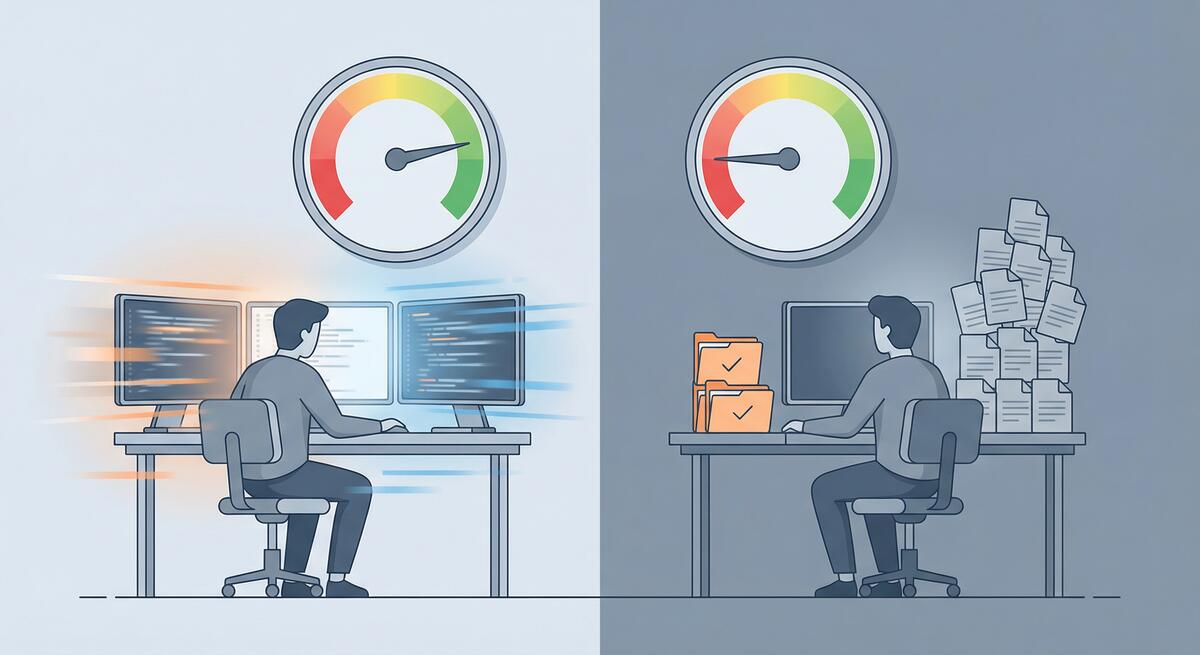
The AI Productivity Paradox: Why Experienced Developers Are Slowing Down
There’s something strange happening in software development right now, and I think we need to talk about it.
Recent research has surfaced a troubling finding: experienced developers working on complex systems are actually 19% slower when using AI coding tools—despite perceiving themselves as working faster. This isn’t a minor discrepancy. It’s a fundamental disconnect between how productive we feel and how productive we actually are.
As someone who’s been experimenting with AI tools extensively (and writing about the results), this finding resonates with my experience. Let me break down what’s happening and what it means for engineering teams.

AI Agents and Google Slides: When Promise Meets Reality
I’ve been experimenting with AI agents to help create Google Slides presentations, and I’ve discovered something interesting: they’re great at the planning and ideation phase, but they completely fall apart when it comes to actually delivering on their promises.
The Promising Start
I’ve had genuinely great success using ChatGPT to help with presentation planning. I’ll start a conversation about my presentation topic, share the core material I want to cover, and ChatGPT does an excellent job of:

When AI Assistants Fail: The Meeting Scheduling Reality Check
I recently tried to use AI assistants to solve what should be a straightforward problem: scheduling a meeting with three other people at my office. We’re all Google Workspace users, so I figured this would be a perfect use case for AI—especially given all the hype about AI assistants being able to handle calendar management and scheduling.
Spoiler alert: both ChatGPT and Gemini failed spectacularly.
The ChatGPT Experience
I started with ChatGPT, thinking it would be able to help coordinate schedules. My request was simple: find a time that works for me and three colleagues for a meeting.
Categories
Tags
- 100pounds
- 2020
- Acp
- Adblock-Plus
- Adoption
- Agentic
- Agents
- Agile
- Ai
- Ai-Agents
- Amazon
- Apache
- Apple
- Architecture
- Audit
- Authorize-Net
- Automation
- Azure
- Benchmarks
- Bing
- Bingbot
- Blog
- Book-Reviews
- Books
- Burnout
- Business-Tools
- Cache
- Career
- Chatgpt
- Chrome
- Cicd
- Claude
- Cloudflare
- Code-Quality
- Code-Review
- Codex
- Coding
- Coding-Agents
- Compass
- Conversion
- Copilot
- Css
- Culture
- Cursor
- Cve
- Deployment
- Design-Patterns
- Developer-Experience
- Developer-Tools
- Developer-Velocity
- Development
- Disqus
- Docker
- Documentation
- Enterprise
- Fine-Tuning
- Firebase
- Firefox
- Full-Stack
- Future-of-Work
- Gemini
- Genesis-Framework
- Getting-Started
- Ghost-Tag
- Github
- Github-Copilot
- Githubpages
- Google-Slides
- Google-Workspace
- Governance
- Helper
- Hiring
- How-Not-To
- How-To
- Html
- Hugo
- Ide
- Infrastructure
- Integration
- Internet-Explorer
- Interviews
- Iphone-6
- Javascript
- Jekyll
- Jetbrains
- Jquery
- Junior-Developers
- Knowledge-Management
- Laravel
- Leadership
- Legal
- Lessons-Learned
- Llms
- Local-First
- MacOS
- Magento
- Magento 2
- Magento2
- Management
- Mcp
- Meetings
- Mental-Health
- Mentorship
- Metr
- Metrics
- Microsoft
- Models
- Moltbot
- Multi-Agent
- Mysql
- Netlify
- Nginx
- Nist
- Nodejs
- Open-Source
- Openai
- Openclaw
- Orchestration
- OSX
- Parallelization
- Performance
- Personal
- Php
- Policy
- Presentations
- Process
- Product-Development
- Productivity
- Programming
- Prompt-Injection
- Protocols
- Pull-Requests
- Python
- Quality
- Rant
- Remote-Work
- Replit
- Research
- Responsive-Web-Design
- Retrospective
- Roi
- Safari
- Sales
- Scrum
- Security
- Senior-Engineers
- Series
- Sitecatalyst
- Sota
- Sql
- Sql-Server
- Standards
- Tasks
- Teams
- Technical-Debt
- Testing
- Tier-Pricing
- Tips
- Tmobile
- Tools
- Trust
- Unittest
- Ux
- Validation
- Varnish
- Vercel
- Verification
- Vibe-Coding
- Visual-Studio
- Vs-Code
- Web-Development
- Windows-7
- Windows-Vista
- Woocommerce
- Wordpress
- Workflow
- Workflows
- Xml