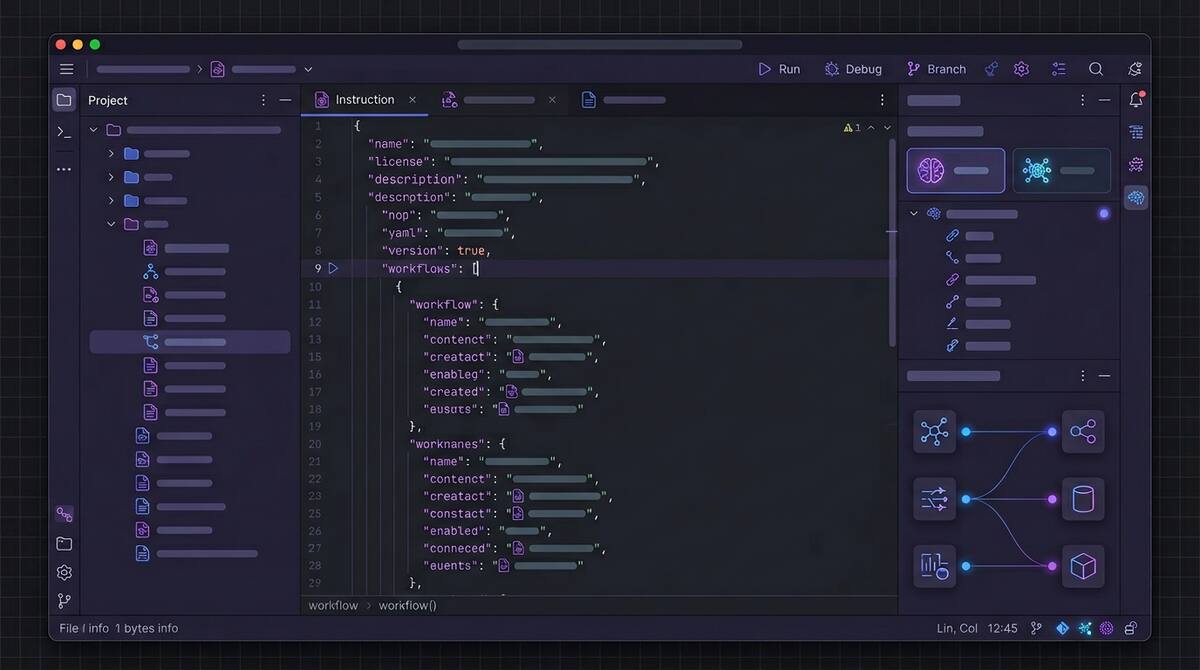
GitHub Copilot Goes Fully Agentic in JetBrains: Hooks, MCP, and Instruction Files
In mid-March 2026, GitHub promoted a major bundle of Copilot agentic capabilities to general availability in JetBrains IDEs, moving key features out of preview for day-to-day use.
The changelog reads like a checklist of what “serious agentic IDE support” now means:
- Custom agents and sub-agents, plus a planning-oriented agent workflow for breaking down complex work
- Agent hooks in public preview, so teams can run custom commands at defined points in an agent session
- MCP auto-approve at server and tool granularity to reduce approval friction when policies allow it
- Automatic discovery of
AGENTS.mdandCLAUDE.mdinstruction files during agent sessions - Auto model selection generally available, with Copilot choosing models based on availability and performance
- An extended reasoning experience for models that expose more explicit thinking, such as Codex-class workflows
Why JetBrains Users Should Care
JetBrains IDEs are where many teams live for deep language support, refactoring, and navigation. Agent features only matter if they meet developers in that workflow, not as a separate tool they resent switching to.

The MCP Security Problem Is Really a Least-Privilege Problem
The most important security story around agent infrastructure right now is not a single CVE. It is the growing realization that MCP security is immature by default.
As of March 2026, reporting around MCP security points to more than 30 CVEs, thousands of publicly reachable servers with weak or no authentication, and a still-evolving roadmap for making the protocol more production-ready. One especially concerning figure: roughly 36% of observed MCP servers reportedly accept connections without meaningful authentication.

Why NIST's AI Agent Standards Initiative Matters Right Now
One of the most consequential AI stories this month is not a product launch. It is the NIST AI Agent Standards Initiative.
NIST launched the effort through its Center for AI Standards and Innovation to focus on security, interoperability, and identity for AI agents. The initiative is structured around three pillars: industry-led standards development, open protocol support, and security research. It already has concrete deadlines attached, including a March security request for input and an April identity concept paper.

Visual Studio's Built-In Azure MCP Server Is a Bigger Deal Than It Looks
Microsoft quietly made one of the strongest enterprise bets in the current AI tooling cycle: Azure MCP Server is now built into Visual Studio 2026.
For teams already living in Microsoft’s ecosystem, this is not just another integration announcement. It is a signal that agentic workflows are moving from optional plugin territory into the default shape of mainstream enterprise development.
Why This Matters
MCP, or Model Context Protocol, is becoming the standard way AI agents connect to tools, systems, and data sources. We already knew that mattered in principle. What changes here is that Microsoft has now embedded an MCP-backed cloud workflow directly inside a flagship IDE.
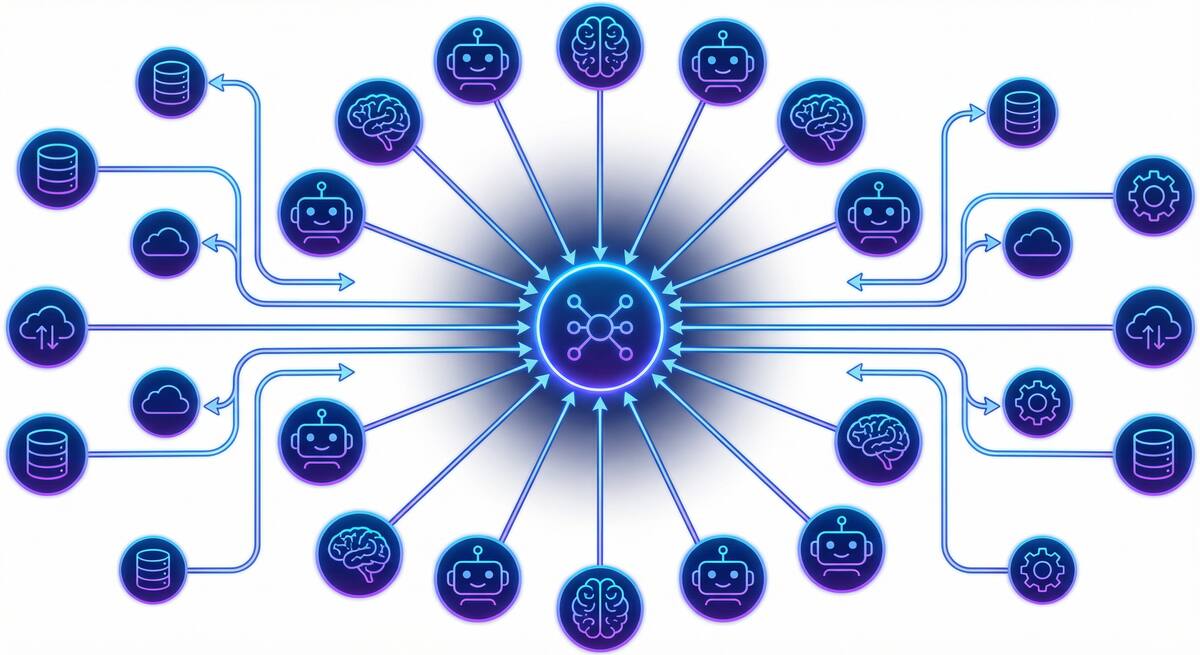
MCP: The Integration Standard That Quietly Became Mandatory
If you were paying attention to AI tooling in late 2024, you heard about the Model Context Protocol (MCP). If you weren’t, you may have missed the quiet transition from “Anthropic’s new open standard” to “the de facto integration layer for AI agents.” By early 2026, MCP has 70+ client applications, 10,000+ active servers, 97+ million monthly SDK downloads, and—in December 2025—moved to governance under the Agentic AI Foundation under the Linux Foundation. Anthropic, OpenAI, Google, Microsoft, and Amazon have all adopted it.
Categories
Tags
- 100pounds
- 2020
- Acp
- Adblock-Plus
- Adoption
- Agentic
- Agents
- Agile
- Ai
- Ai-Agents
- Amazon
- Apache
- Apple
- Architecture
- Audit
- Authorize-Net
- Automation
- Azure
- Benchmarks
- Bing
- Bingbot
- Blog
- Book-Reviews
- Books
- Burnout
- Business-Tools
- Cache
- Career
- Chatgpt
- Chrome
- Cicd
- Claude
- Cloudflare
- Code-Quality
- Code-Review
- Codex
- Coding
- Coding-Agents
- Compass
- Conversion
- Copilot
- Css
- Culture
- Cursor
- Cve
- Deployment
- Design-Patterns
- Developer-Experience
- Developer-Tools
- Developer-Velocity
- Development
- Disqus
- Docker
- Documentation
- Enterprise
- Fine-Tuning
- Firebase
- Firefox
- Full-Stack
- Future-of-Work
- Gemini
- Genesis-Framework
- Getting-Started
- Ghost-Tag
- Github
- Github-Copilot
- Githubpages
- Google-Slides
- Google-Workspace
- Governance
- Helper
- Hiring
- How-Not-To
- How-To
- Html
- Hugo
- Ide
- Infrastructure
- Integration
- Internet-Explorer
- Interviews
- Iphone-6
- Javascript
- Jekyll
- Jetbrains
- Jquery
- Junior-Developers
- Knowledge-Management
- Laravel
- Leadership
- Legal
- Lessons-Learned
- Llms
- Local-First
- MacOS
- Magento
- Magento 2
- Magento2
- Management
- Mcp
- Meetings
- Mental-Health
- Mentorship
- Metr
- Metrics
- Microsoft
- Models
- Moltbot
- Multi-Agent
- Mysql
- Netlify
- Nginx
- Nist
- Nodejs
- Open-Source
- Openai
- Openclaw
- Orchestration
- OSX
- Parallelization
- Performance
- Personal
- Php
- Policy
- Presentations
- Process
- Product-Development
- Productivity
- Programming
- Prompt-Injection
- Protocols
- Pull-Requests
- Python
- Quality
- Rant
- Remote-Work
- Replit
- Research
- Responsive-Web-Design
- Retrospective
- Roi
- Safari
- Sales
- Scrum
- Security
- Senior-Engineers
- Series
- Sitecatalyst
- Sota
- Sql
- Sql-Server
- Standards
- Tasks
- Teams
- Technical-Debt
- Testing
- Tier-Pricing
- Tips
- Tmobile
- Tools
- Trust
- Unittest
- Ux
- Validation
- Varnish
- Vercel
- Verification
- Vibe-Coding
- Visual-Studio
- Vs-Code
- Web-Development
- Windows-7
- Windows-Vista
- Woocommerce
- Wordpress
- Workflow
- Workflows
- Xml