
Vercel's Plugin for Coding Agents: Deployment Knowledge as Infrastructure
Vercel’s plugin for coding agents is one of those releases that sounds incremental until you notice what it is really doing: it turns deployment and edge-platform expertise into structured, reusable context that agents can invoke reliably.
According to Vercel’s announcement, the plugin bundles broad platform coverage (on the order of 47+ skills) and includes specialist agents aimed at deployment optimization scenarios, so agents are not guessing their way through framework-specific hosting details every time.

Gemini CLI Conductor Turns Review into a Structured Report
Google’s automated review update for Gemini CLI Conductor is worth paying attention to for a simple reason: it treats AI review as a structured verification step, not as another free-form chat.
Conductor’s new review mode evaluates generated code across multiple explicit dimensions:
- code quality
- plan compliance
- style and guideline adherence
- test validation
- security review
The output is a categorized report by severity, with exact file references and a path to launch follow-up work. That is an important product choice.

JetBrains Air and the Case for the Agent-Native IDE
JetBrains Air, launched in public preview in early March, is one of the more interesting answers yet to a question the AI tooling market keeps circling: do we really want agents bolted onto traditional editors, or do we eventually need environments designed around them from the start?
Air is betting on the second path.
Why Air Is Interesting
Most current AI coding tools still inherit the shape of the pre-AI IDE. There is a primary editor, maybe a chat pane, maybe an agent sidebar, and the user is still clearly the central operator of a mostly traditional workspace.

VS Code's New Agent Features Show What 'Practical' Actually Means
One of the better AI tooling posts of the month came from Microsoft itself: “Making agents practical for real-world development.” That framing is useful because it captures what the market is moving toward. The interesting releases are no longer just about whether an agent can generate code. They are about whether the agent can survive contact with a messy, real workflow.
VS Code 1.110 is a good example of that shift. The March release adds native browser control for agents, better session memory, context compaction for long conversations, installable agent extensions, and a real-time Agent Debug panel. None of those features are flashy in isolation. Together, they show what “practical” now means in agentic development.

Why AI Testing and Validation Tools Are Becoming the Real Leverage Point
One of the clearest signs that the AI coding market is maturing is that some of the most interesting product launches are no longer about generating code. They are about proving the generated code is usable.
TestSprite 2.1, released in early March 2026, is a good example. The company says nearly 100,000 development and QA teams now use the platform to validate AI-generated code, and the latest release claims a 4-5x faster testing engine, visual test editing, automatic pull request testing, and an especially telling benchmark: AI-generated code initially passed only 42% of comprehensive test cases, but jumped to 93% after one iteration with TestSprite’s testing agent.

OpenAI Symphony and the New Bottleneck: Orchestrating Agents Well
OpenAI’s new Symphony project is one of the most revealing open-source releases in the current coding-agent cycle.
At the surface level, it is an orchestration framework for autonomous software development runs. It connects to issue trackers, spins up isolated implementation runs, coordinates agents, collects proof of work, and helps land changes once they are verified. It is built in Elixir on the BEAM runtime and is clearly optimized for concurrency and fault tolerance.

Cursor in JetBrains and the End of IDE Lock-In
One of the quietest but most important developer-tooling stories of March 2026 is that Cursor is now available directly inside JetBrains IDEs through the Agent Client Protocol, or ACP, registry.
At first glance, this looks like a convenience feature. Cursor users can keep their preferred agent while staying in IntelliJ IDEA, PyCharm, or WebStorm. JetBrains users get access to a popular agentic workflow without switching editors. Nice, but not transformative.

Codex Security and the Rise of AI Reviewing AI
The next big shift in AI-assisted software development is not more code generation. It is AI for verification.
OpenAI’s new Codex Security research preview, announced in early March 2026, is a good signal of where the market is going. The product scans repositories commit by commit, builds repository-specific threat models, validates findings in isolated environments, and ranks issues with proposed fixes. OpenAI says early adopters used it to detect more than 11,000 critical and high-severity vulnerabilities while cutting false positives by more than 50%.

The OpenAI Codex App and What Multi-Agent Development Actually Looks Like
In February 2026, OpenAI shipped a standalone Codex app. The headline is straightforward: it lets you manage multiple AI coding agents across projects, with parallel task execution, persistent context, and built-in git tooling. It’s currently available on macOS for paid ChatGPT plan subscribers.
But the headline undersells what’s actually happening. The Codex app isn’t just a better chat interface for code—it’s an early, concrete version of what multi-agent software development looks like when it arrives as a consumer product. Understanding what it actually does (and doesn’t do) matters for any team thinking seriously about AI-assisted development in 2026.
MCP: The Integration Standard That Quietly Became Mandatory
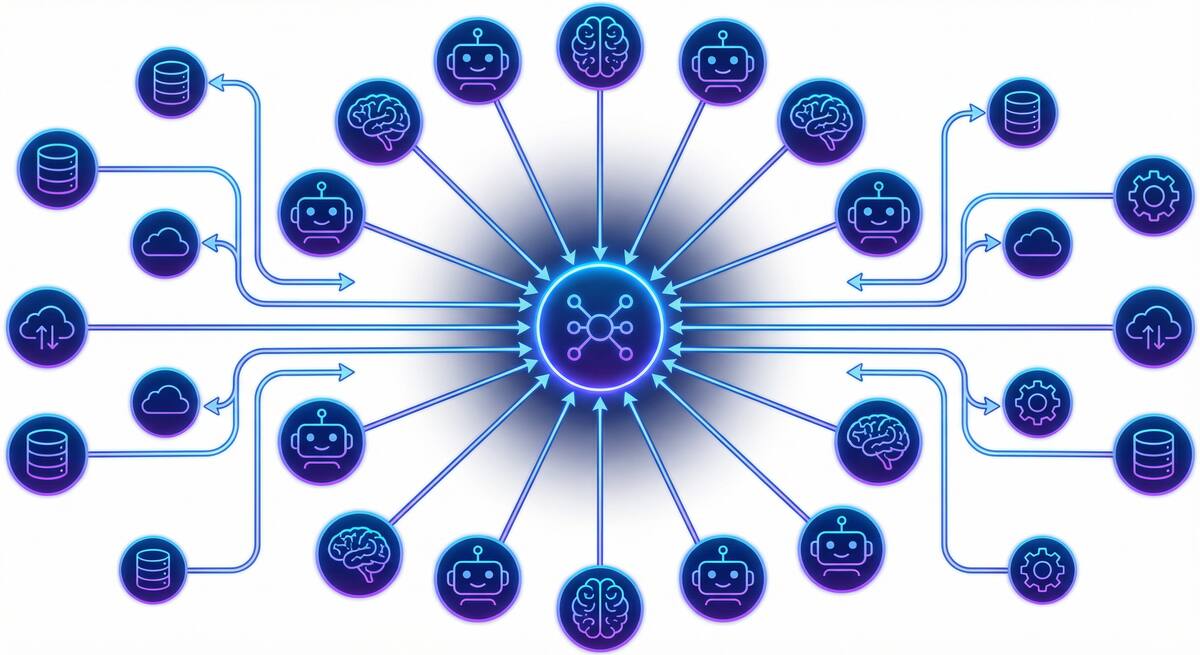
If you were paying attention to AI tooling in late 2024, you heard about the Model Context Protocol (MCP). If you weren’t, you may have missed the quiet transition from “Anthropic’s new open standard” to “the de facto integration layer for AI agents.” By early 2026, MCP has 70+ client applications, 10,000+ active servers, 97+ million monthly SDK downloads, and—in December 2025—moved to governance under the Agentic AI Foundation under the Linux Foundation. Anthropic, OpenAI, Google, Microsoft, and Amazon have all adopted it.

SERA and the Case for Open-Source Coding Agents That Know Your Repo
If your team has tried Cursor, Copilot, or other AI coding tools and found them underwhelming on your codebase—wrong conventions, missing context, generic suggestions—you’re running into a fundamental limit: those models are trained and optimized for the average repo, not yours. In early 2026, AI2 (Allen Institute for AI) released SERA (Soft-Verified Efficient Repository Agents), an open-source family of coding agents built for something different: specialization to your repository through fine-tuning, at a cost that makes it realistic for more teams.
Categories
Tags
- 100pounds
- 2020
- Acp
- Adblock-Plus
- Adoption
- Agentic
- Agents
- Agile
- Ai
- Ai-Agents
- Amazon
- Apache
- Apple
- Architecture
- Audit
- Authorize-Net
- Automation
- Azure
- Benchmarks
- Bing
- Bingbot
- Blog
- Book-Reviews
- Books
- Burnout
- Business-Tools
- Cache
- Career
- Chatgpt
- Chrome
- Cicd
- Claude
- Cloudflare
- Code-Quality
- Code-Review
- Codex
- Coding
- Coding-Agents
- Compass
- Conversion
- Copilot
- Css
- Culture
- Cursor
- Cve
- Deployment
- Design-Patterns
- Developer-Experience
- Developer-Tools
- Developer-Velocity
- Development
- Disqus
- Docker
- Documentation
- Enterprise
- Fine-Tuning
- Firebase
- Firefox
- Full-Stack
- Future-of-Work
- Gemini
- Genesis-Framework
- Getting-Started
- Ghost-Tag
- Github
- Github-Copilot
- Githubpages
- Google-Slides
- Google-Workspace
- Governance
- Helper
- Hiring
- How-Not-To
- How-To
- Html
- Hugo
- Ide
- Infrastructure
- Integration
- Internet-Explorer
- Interviews
- Iphone-6
- Javascript
- Jekyll
- Jetbrains
- Jquery
- Junior-Developers
- Knowledge-Management
- Laravel
- Leadership
- Legal
- Lessons-Learned
- Llms
- Local-First
- MacOS
- Magento
- Magento 2
- Magento2
- Management
- Mcp
- Meetings
- Mental-Health
- Mentorship
- Metr
- Metrics
- Microsoft
- Models
- Moltbot
- Multi-Agent
- Mysql
- Netlify
- Nginx
- Nist
- Nodejs
- Open-Source
- Openai
- Openclaw
- Orchestration
- OSX
- Parallelization
- Performance
- Personal
- Php
- Policy
- Presentations
- Process
- Product-Development
- Productivity
- Programming
- Prompt-Injection
- Protocols
- Pull-Requests
- Python
- Quality
- Rant
- Remote-Work
- Replit
- Research
- Responsive-Web-Design
- Retrospective
- Roi
- Safari
- Sales
- Scrum
- Security
- Senior-Engineers
- Series
- Sitecatalyst
- Sota
- Sql
- Sql-Server
- Standards
- Tasks
- Teams
- Technical-Debt
- Testing
- Tier-Pricing
- Tips
- Tmobile
- Tools
- Trust
- Unittest
- Ux
- Validation
- Varnish
- Vercel
- Verification
- Vibe-Coding
- Visual-Studio
- Vs-Code
- Web-Development
- Windows-7
- Windows-Vista
- Woocommerce
- Wordpress
- Workflow
- Workflows
- Xml