
GitHub Says Copilot's Coding Agent Starts Work 50% Faster. Here's Why That Changes the Math
In a March 2026 changelog update, GitHub reported that the Copilot coding agent starts work roughly 50% faster, with optimizations to the cloud-based development environments agents use to spin up and begin executing on a repository.
That sounds like a performance tweak. It is also a shift in how teams should think about agent economics.
Cold Start Was a Hidden Tax
For any agent that runs in an isolated or remote environment, time-to-first-action is not just latency. It is friction that shapes behavior:

Why AI Is Hurting Your Best Engineers Most
The productivity story on AI coding tools has a flattering headline: senior engineers realize nearly five times the productivity gains of junior engineers from AI tools. More experience means better prompts, better evaluation of output, better use of AI on the right tasks. The gap is real and it makes sense.
But there’s a hidden cost buried in that same data. The tasks senior engineers are being asked to spend their time on are changing—and not always in ways that use their strengths well. Increasingly, the work that lands on senior engineers’ plates in AI-augmented teams is validation, review, and debugging of AI-generated code—a category of work that is simultaneously less interesting, harder than it looks, and consuming time that used to go to architecture, design, and mentorship.
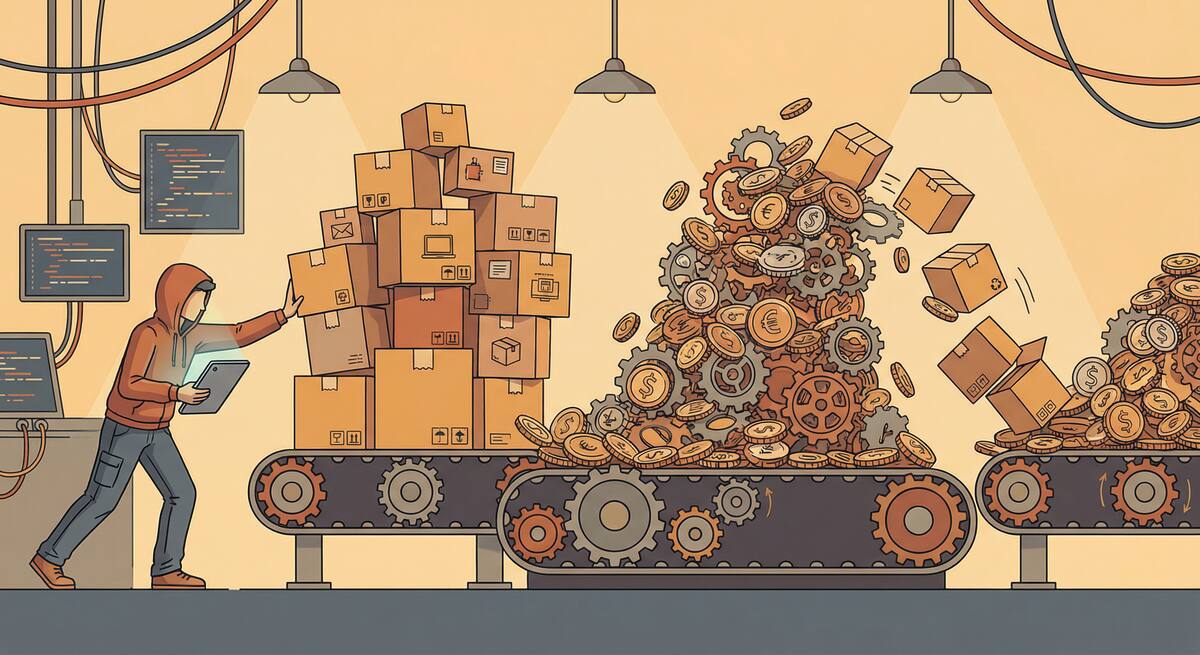
The Great Toil Shift: AI Didn't Remove Your Drudge Work, It Moved It
One of the clearest promises of AI coding tools was relief from developer toil: the repetitive, low-value work—debugging boilerplate, writing tests for obvious code, fixing the same style violations—that keeps engineers from doing the interesting parts of their jobs. The premise was simple: AI does the tedious parts, humans do the creative parts.
The data from 2026 tells a more nuanced story. According to Sonar’s analysis and Opsera’s 2026 AI Coding Impact Benchmark Report, the amount of time developers spend on toil hasn’t decreased meaningfully. It’s shifted. High AI users spend roughly the same 23–25% of their workweek on drudge work as low AI users—they’ve just changed what they’re doing with that time.

Vibe Coding Won. Now What?
Vibe coding went from a niche provocation to the dominant paradigm of software development in less than 18 months. Collins English Dictionary named it 2025 Word of the Year. OpenAI co-founder Andrej Karpathy coined the term in February 2025; by early 2026, approximately 92% of US developers use AI coding tools daily, and 46% of all new code is AI-generated. The adoption battle is over—vibe coding won.
So why does it feel like the victory lap is getting complicated?

The METR Study One Year Later: When AI Actually Slows Developers
In early 2025, METR (Model Evaluation and Transparency Research) ran a randomized controlled trial that caught the industry off guard. Experienced open-source developers—people with years on mature, high-star repositories—were randomly assigned to complete real tasks either with AI tools (Cursor Pro with Claude) or without. The result: with AI, they took 19% longer to finish. Yet before the trial they expected AI to make them about 24% faster, and after it they believed they’d been about 20% faster. A 39-point gap between perception and reality.

Why Your Team Isn't Seeing AI Benefits (And It's Not the Tools)
You rolled out AI coding tools. You got licenses, ran the demos, and encouraged the team to try them. Months later, the feedback is lukewarm: “We use it sometimes.” “It’s okay for small stuff.” “I’m not sure it’s actually faster.” Nobody’s seeing the dramatic productivity gains the vendor promised.
If this sounds familiar, you’re not alone. Research shows that while 84% of developers use or plan to use AI tools, only 55% find them highly effective—and trust in AI output has dropped sharply. Adoption doesn’t equal impact. The gap between “we have AI” and “AI is helping us ship better, faster” is where most teams get stuck.

The Documentation Problem AI Actually Solves
I’ve spent the past several weeks writing critically about AI tools—the productivity paradox, comprehension debt, burnout risks, vibe coding dangers. Those concerns are real and important.
But I want to end this series on a genuinely positive note, because there’s one area where AI tools deliver clear, consistent, unambiguous value for engineering teams: documentation.
Documentation is the unloved obligation of software development. Everyone agrees it’s important. Nobody wants to write it. The result is that most codebases are woefully underdocumented, and the documentation that does exist is often outdated, incomplete, or wrong.

The AI Burnout Paradox: When Productivity Tools Make Developers Miserable
Here’s an irony that nobody predicted: AI tools designed to make developers more productive are making some of them more miserable.
The promise was straightforward. AI handles the tedious parts of coding—boilerplate, repetitive patterns, documentation lookup—freeing developers to focus on the interesting, creative work. Less toil, more thinking. Less grinding, more innovating.
The reality is more complicated. Research shows that GenAI adoption is heightening burnout by increasing job demands rather than reducing them. Developers report cognitive overload, loss of flow state, rising performance expectations, and a subtle but persistent feeling that their work is being devalued.
Categories
Tags
- 100pounds
- 2020
- Acp
- Adblock-Plus
- Adoption
- Agentic
- Agents
- Agile
- Ai
- Ai-Agents
- Amazon
- Apache
- Apple
- Architecture
- Audit
- Authorize-Net
- Automation
- Azure
- Benchmarks
- Bing
- Bingbot
- Blog
- Book-Reviews
- Books
- Burnout
- Business-Tools
- Cache
- Career
- Chatgpt
- Chrome
- Cicd
- Claude
- Cloudflare
- Code-Quality
- Code-Review
- Codex
- Coding
- Coding-Agents
- Compass
- Conversion
- Copilot
- Css
- Culture
- Cursor
- Cve
- Design-Patterns
- Developer-Experience
- Developer-Tools
- Developer-Velocity
- Development
- Disqus
- Docker
- Documentation
- Enterprise
- Fine-Tuning
- Firefox
- Future-of-Work
- Gemini
- Genesis-Framework
- Getting-Started
- Ghost-Tag
- Github
- Github-Copilot
- Githubpages
- Google-Slides
- Google-Workspace
- Governance
- Helper
- Hiring
- How-Not-To
- How-To
- Html
- Hugo
- Ide
- Infrastructure
- Integration
- Internet-Explorer
- Interviews
- Iphone-6
- Javascript
- Jekyll
- Jetbrains
- Jquery
- Junior-Developers
- Knowledge-Management
- Laravel
- Leadership
- Legal
- Lessons-Learned
- Llms
- Local-First
- MacOS
- Magento
- Magento 2
- Magento2
- Management
- Mcp
- Meetings
- Mental-Health
- Mentorship
- Metr
- Metrics
- Microsoft
- Moltbot
- Multi-Agent
- Mysql
- Netlify
- Nginx
- Nist
- Nodejs
- Open-Source
- Openai
- Openclaw
- Orchestration
- OSX
- Performance
- Personal
- Php
- Policy
- Presentations
- Process
- Productivity
- Programming
- Prompt-Injection
- Protocols
- Pull-Requests
- Python
- Quality
- Rant
- Remote-Work
- Research
- Responsive-Web-Design
- Retrospective
- Roi
- Safari
- Sales
- Scrum
- Security
- Senior-Engineers
- Series
- Sitecatalyst
- Sota
- Sql
- Sql-Server
- Standards
- Tasks
- Teams
- Technical-Debt
- Testing
- Tier-Pricing
- Tips
- Tmobile
- Tools
- Trust
- Unittest
- Ux
- Validation
- Varnish
- Verification
- Vibe-Coding
- Visual-Studio
- Vs-Code
- Web-Development
- Windows-7
- Windows-Vista
- Woocommerce
- Wordpress
- Workflow
- Workflows
- Xml