Gemini CLI Conductor Turns Review into a Structured Report
- 3 minutes - Mar 20, 2026
- #ai#google#gemini#code-review#developer-tools
Google’s automated review update for Gemini CLI Conductor is worth paying attention to for a simple reason: it treats AI review as a structured verification step, not as another free-form chat.
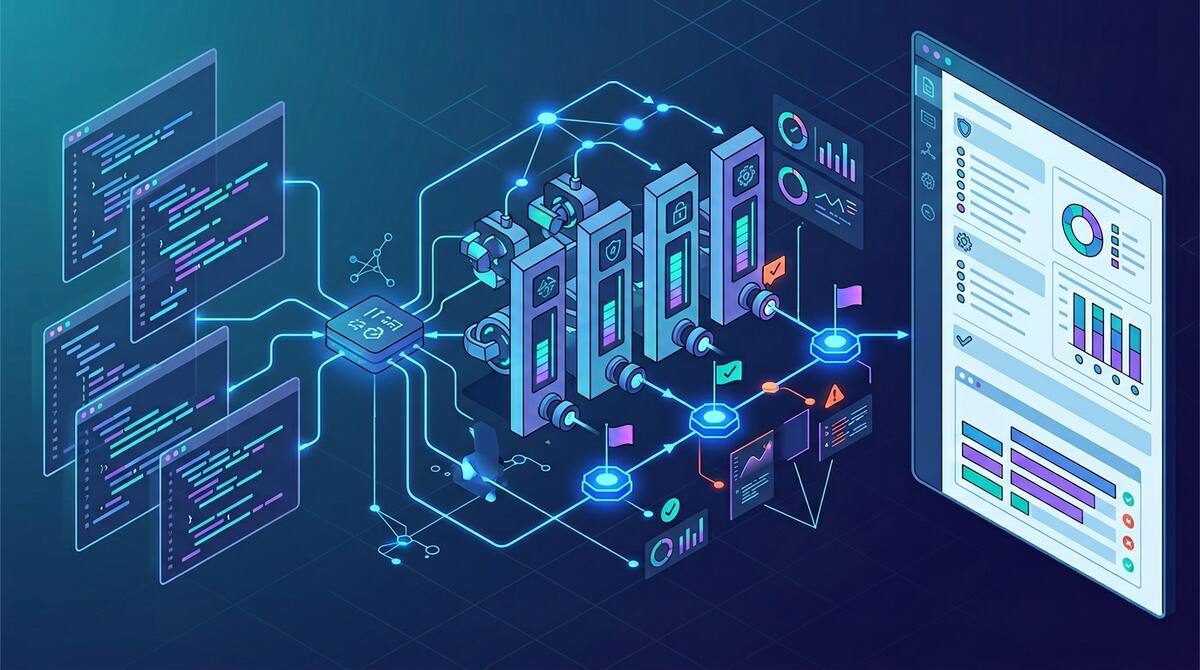
Conductor’s new review mode evaluates generated code across multiple explicit dimensions:
- code quality
- plan compliance
- style and guideline adherence
- test validation
- security review
The output is a categorized report by severity, with exact file references and a path to launch follow-up work. That is an important product choice.
Why the Format Matters
One of the problems with AI review tools is that they often inherit the conversational format of general assistants. The result can be vague or hard to operationalize:
- maybe a comment is important
- maybe it is just a suggestion
- maybe it reflects the spec
- maybe it does not
Conductor is taking a more workflow-oriented path. By anchoring review to dimensions like plan compliance and test validation, it pushes review closer to the logic of a checklist or release gate.
That is much easier for teams to use operationally.
Plan Compliance Is the Standout Feature
The most interesting piece here is probably plan compliance. Conductor can compare the implementation against planning artifacts like plan.md and spec.md and ask whether the work actually matches the intended solution.
That matters because one of the recurring failure modes in AI coding is not that the code is broken. It is that the code is plausibly correct for the wrong interpretation of the task.
Humans do this too, of course. But AI amplifies the problem because it can produce a lot of polished output built on a flawed read of the spec. A review layer that explicitly checks alignment against the plan is a stronger answer to that problem than just linting or static analysis.
The Bigger Market Signal
Conductor also reinforces a pattern that is becoming hard to miss:
- Anthropic is productizing PR review
- OpenAI is productizing security validation
- testing vendors are productizing fast confidence loops
- Google is productizing post-implementation verification
The market has discovered that the limiting factor in agentic development is not raw code production. It is whether teams can turn generated work into something trustworthy without drowning in manual inspection.
Conductor’s report model is one attempt to industrialize that trust-building step.
Where This Fits Best
This kind of review tooling is most valuable when teams already have some process discipline:
- clear specs
- planning artifacts
- repeatable style and architecture rules
- tests that can be run automatically
If those ingredients are missing, a structured report may still be helpful, but it has less to anchor against. Like many AI tools, it gets better when the surrounding system is well defined.
That is also why this category may help stronger engineering organizations first. The more explicit your process is, the easier it is for an AI review tool to verify whether generated work met the bar.
The Practical Takeaway
The useful question is not whether Gemini CLI Conductor has the best review feature. The useful question is what this product shape teaches us.
It suggests that AI review is maturing in three directions:
- less open-ended conversation
- more structured, severity-based output
- more emphasis on matching implementation to intent
That last part is especially important. A lot of engineering quality comes from making sure the right thing was built, not just that the built thing looks clean.
Gemini CLI Conductor’s review feature matters because it treats verification as a formal artifact, not just a side conversation after the code is already written.